
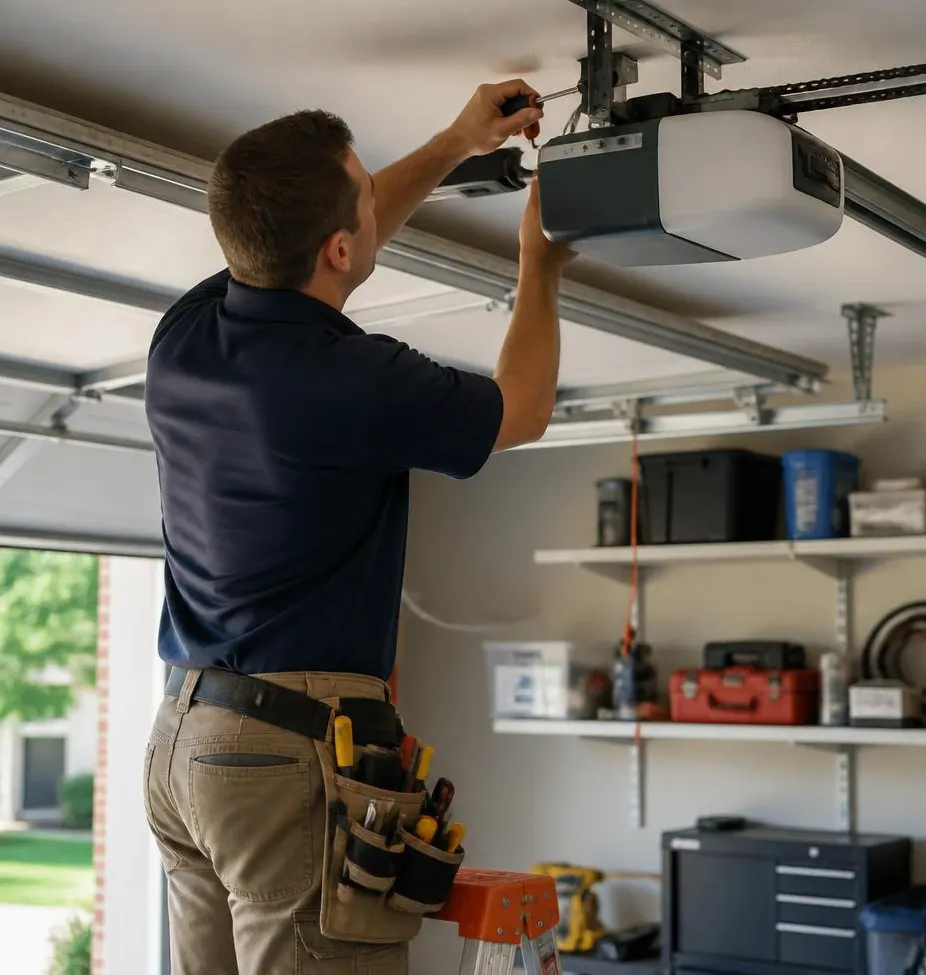
The Short Answer
Garage door springs are wound under extreme tension to lift a door that can weigh over a hundred pounds, and when that tension releases suddenly, it does so with enough force to break fingers, shatter facial bones, or worse. The springs, the winding bars, and the door itself can all turn into projectiles in a fraction of a second. That is why this is one of the few home repairs where professional installers almost universally tell homeowners: don't.
What Actually Goes Wrong
A standard torsion spring is wound dozens of times around a shaft, storing mechanical energy the same way a coiled snake stores striking force. To replace it, someone has to use winding bars to carefully unwind that stored tension before the spring can be removed. If the bars slip, if the wrong size bar is used, or if the person loses grip for even a second, the spring can unwind violently on its own.
Extension springs carry a different but related risk. They stretch along the horizontal tracks and are also under heavy load when the door is closed. Without a properly installed safety cable running through the spring, a snapped extension spring can fly across the garage like a slingshot.
Common mistakes that turn a repair into an emergency include using a screwdriver or makeshift tool instead of properly sized winding bars, misjudging how many turns the spring needs, failing to secure the door in the open position before starting, and working on the spring while the opener is still connected and able to engage.
How Badly People Get Hurt
The injuries associated with spring failure aren't minor. They include:
- Crushed or broken fingers and hands from the winding bars kicking back
- Facial and eye injuries from spring fragments or cable whip
- Deep lacerations from sharp, uncoiling metal
- Back and shoulder injuries from the door itself dropping unexpectedly while someone is underneath or beside it
These aren't rare freak accidents. They're the predictable result of working with a component engineered to be handled only with the right tools and the right technique, every single time.
Why Phoenix Conditions Make This Worse
Metal fatigue happens faster here. Months of extreme dry heat bake the garage, cook factory lubricant into a gummy residue, and cause the spring's coils to expand and contract repeatedly through sharp daytime-to-nighttime temperature swings. That stress accelerates wear and makes springs more prone to sudden failure rather than a slow, obvious weakening. A spring that looks fine on a Tuesday can snap on a Wednesday. Add in monsoon dust working its way into the coils and tracks, and you have a system that's degrading faster than it would in a milder climate, often without visible warning signs.
What Actually Prevents an Injury
You don't need to become a technician to stay safe. You need to know where the line is.
- Never touch the springs themselves. Inspection is fine from a distance; adjustment, winding, or removal is not a homeowner task.
- Watch for warning signs instead of waiting for failure: a visible gap in the coil, a door that feels heavier than usual when lifted manually, loud bangs during operation, or a door that won't stay open on its own.
- Disconnect the opener and operate the door manually if you suspect a spring issue, so the motor doesn't force movement against a compromised spring.
- Keep the area clear of kids and pets if you notice stress signs, until a technician can inspect it.
- Schedule seasonal maintenance rather than waiting for a breakdown. Heat-cycled lubricant and dust buildup both accelerate spring wear, and a maintenance visit catches that early.
If a spring has already broken, don't try to operate the door at all, manually or with the opener. A broken spring means the remaining tension in the system is unpredictable, and that's exactly the scenario that leads to injury.
When to Call Phoenix Garage Door Pro
If you've noticed any of the warning signs above, or your spring has already snapped, it's time to call in a technician rather than a toolbox. Our Spring Replacement service includes proper identification of your spring type and size, controlled winding with professional-grade bars, and a full check of the cables and tracks that often take damage when a spring fails. We also offer Preventive Maintenance visits that catch early wear from Phoenix's heat and dust cycles before it turns into a snapped spring at the worst possible moment, like when your car is halfway in the garage.
If your garage door spring looks stretched, sounds off, or has already broken, call Phoenix Garage Door Pro today. We serve homeowners throughout Phoenix, Scottsdale, Tempe, Mesa, Glendale, Chandler, Cave Creek, and Paradise Valley, and we'll get your door back to safe, reliable operation.